Best WhatsApp Button Generator for a Business Website
The best WhatsApp button generator for a business website is usually a no-code tool that lets you create one clean button, install it with a single script, and keep the placement stable on mobile and desktop. For most teams, that is better than manually pasting raw links across separate pages.
This page is for business owners, marketers, agencies, and site managers who want to choose the right generator before publishing. You will see what to compare, which setup suits each platform, and what mistakes to avoid if you want a button that actually supports conversion.

Quick answer
- Prefer a generator that uses one script across the whole site.
- Choose simple placement and avoid competing floating elements.
- Check mobile spacing on real pages before publishing.
- Use a plugin only when your platform strongly requires it.
Why this matters
Can you use a WhatsApp button generator without coding?
How to set up a WhatsApp button generator on your site
- Choose the WhatsApp destination and decide whether one business number is enough.
- Create the button in the generator and keep the design simple and recognizable.
- Pick the placement and check that it does not fight with your main CTA.
- Install the script once in the global code area, template, or footer field.
- Review high-intent pages such as services, pricing, product, or contact pages.
- Test mobile and desktop behavior on real devices before publishing.
Who this setup suits best
- Small business sites that want one clear messaging CTA.
- Freelancers and agencies that need a faster lead contact route.
- Local service pages where visitors prefer direct messaging.
- Teams that want lighter setup than a full live chat workflow.
If your site needs more than one channel, compare this page with How to Add Messenger Buttons to Website before deciding between one WhatsApp button and a multi-channel widget.
Platform-specific guidance
- WordPress: one shared snippet is usually cleaner than several plugins.
- Shopify and Wix: test product or lead pages first.
- Webflow and Joomla: keep the button outside the content editor flow.
- HTML site: use one script and avoid repeating raw links manually.
- All platforms: confirm spacing on a real phone.
Placement and UX guidance
1
Choose one business goal first: lead questions, booking, pricing, or pre-sale contact.
2
Leave space for cookie notices, sticky buy bars, and mobile browser controls.
3
Homepage, service pages, product pages, and contact pages are usually the best first test locations.
Three common ways to generate a WhatsApp button
Option 1
basic manual setup
Option 2
recommended setup
Option 3
depends on platform
Generator vs raw link vs plugin
| What to compare | Hosted generator | Raw link or plugin |
|---|---|---|
| Speed to launch | Fast once you can place one shared script. | Fast for one page, but often fragmented across a full site. |
| Control over placement | Usually better for consistent floating placement and shared updates. | Often weaker or more manual, especially with raw links. |
| Maintenance | Cleaner when you want one update path across many pages. | Plugins vary in quality; manual links become tedious quickly. |
Common mistakes
Choosing by visuals only
A polished demo is not enough if the generator makes placement, updates, or mobile spacing harder later.
Ignoring real mobile overlap
A generated button can still clash with sticky bars, cookie notices, and browser controls if you only test desktop.
Using several competing buttons
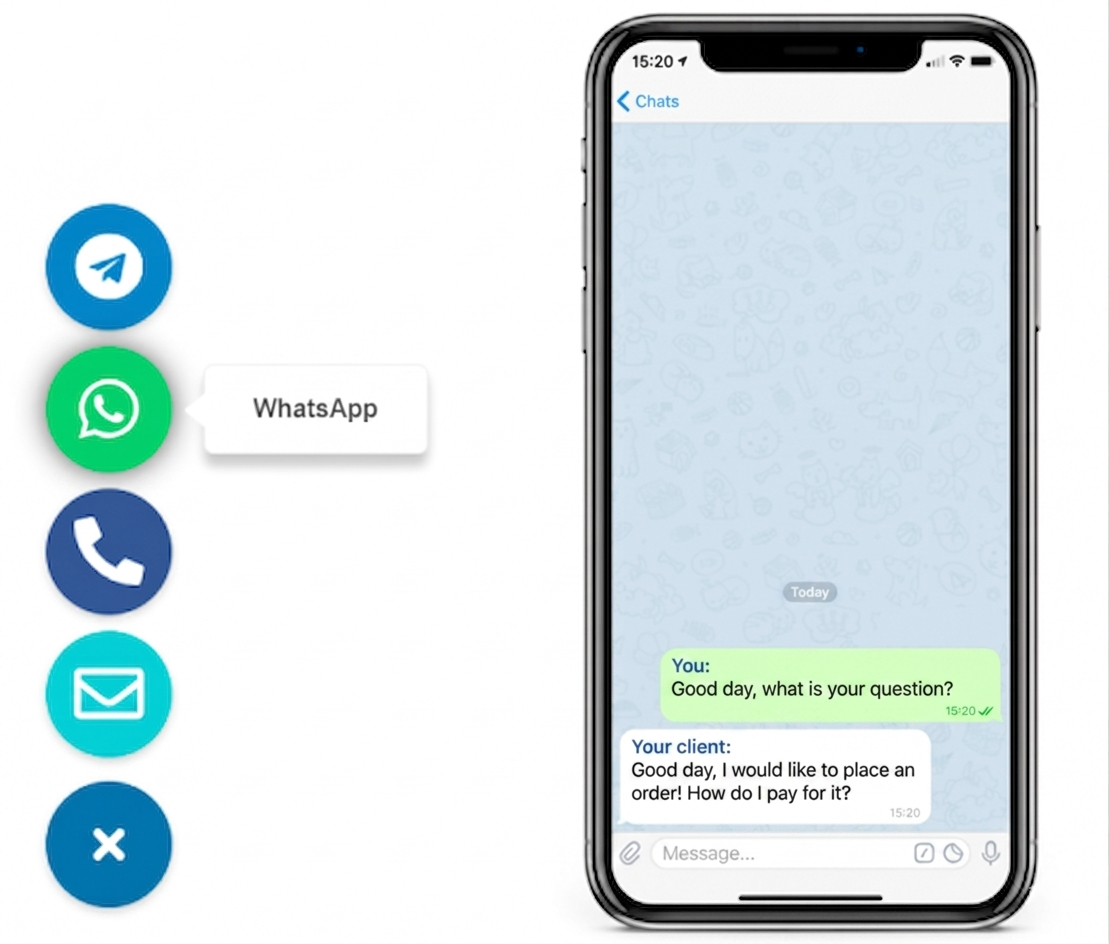
One page should not force WhatsApp, Telegram, Viber, callback, and email into the same visual priority.
Picking the wrong setup path
If your platform accepts one shared script, adding several plugins often creates more maintenance than value.
- The generator lets you install one shared script or snippet.
- The button opens the correct WhatsApp destination.
- The main CTA and the floating button do not compete visually.
- Mobile spacing is clean on real devices.
- The setup path matches the platform you actually use.
- A fallback contact route still exists for visitors who do not want messaging.
Frequently asked questions about WhatsApp button generators
What is the best WhatsApp button generator for a business website?
The best WhatsApp button generator for a business website is one that lets you create the button quickly, place it with one script, and keep the result clear on both mobile and desktop.
Can I use a WhatsApp button generator without coding?
Yes. A hosted generator is usually the simplest no-code route because you create the button in a dashboard, place one script, and manage changes without rewriting page content.
Will a generated WhatsApp button work on mobile and desktop?
It should, but you still need to test both views. A button that looks fine on desktop can still overlap sticky bars, cookie notices, or product CTAs on mobile.
Should I choose a script generator or a plugin for WhatsApp?
If your platform allows custom code, a script-based generator is usually cleaner. Use a plugin or app only when your CMS strongly prefers that path or your team cannot use a shared code field.
Is a WhatsApp button generator better than a raw wa.me link?
A generator is usually better when you want stronger placement control, cleaner design, and easier updates. A raw link is enough only for very simple pages with minimal UX needs.
Where should a business website place a WhatsApp button?
The bottom-right corner is the safest default for most sites, but the real goal is to keep the button visible without hiding checkout controls, sticky bars, or the main page CTA.
Need adjacent reading after this page? Compare the WhatsApp setup guide, the commercial WhatsApp button page, or the broader YourChat blog.