
ADD WHATSAPP, TELEGRAM, AND EMAIL BUTTONS IN ONE WIDGET
To add WhatsApp, Telegram, and email buttons in one widget, keep WhatsApp and Telegram as the instant-contact paths, place email as the fallback for longer requests, and test the widget so the channel choice stays clear on both mobile and desktop.

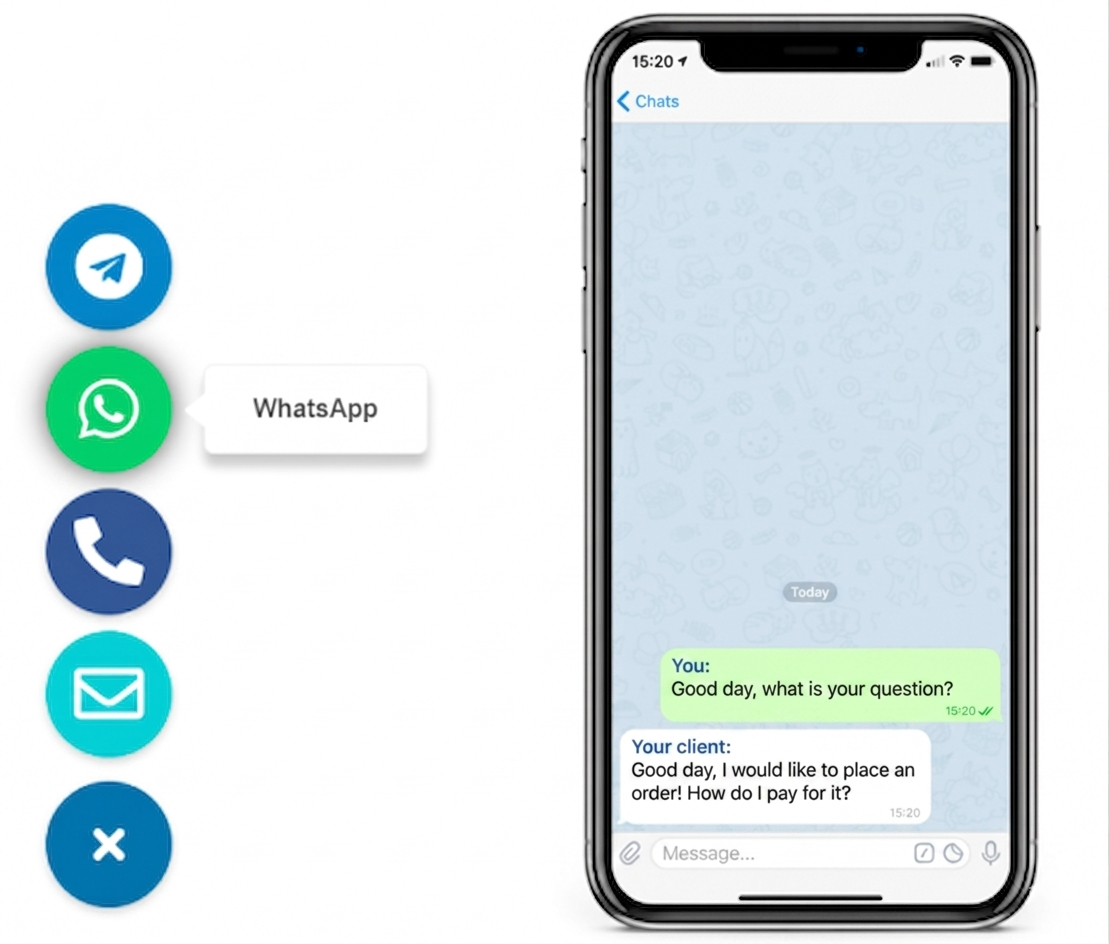
Why put WhatsApp, Telegram, and email in one widget
because different visitors want different response styles
What it is
A three-path contact setup that combines WhatsApp, Telegram, and email in one widget or compact contact block.
Who it fits
Businesses that get both quick pre-sales chats and longer written enquiries, especially from mixed mobile and desktop traffic.
What you get
A cleaner fallback flow, less contact friction, and better channel discipline than showing every option as a separate equal-priority button.
Can you add WhatsApp, Telegram, and email buttons without coding?
mailto: link or a contact page fallback.
Best for a fast launch
Use one launcher with three clearly labeled choices. That keeps the page tidy and avoids repeating contact buttons in several sections.
When email should stay secondary
Email is useful, but it should not interrupt the fast-contact path. Keep it visible as a fallback, not as the first action on high-intent sales pages.
How to add WhatsApp, Telegram, and email buttons step by step
- Choose the channel roles. Decide that WhatsApp handles the fastest chats, Telegram covers visitors who prefer that app, and email takes longer or more formal requests.
- Prepare the destinations first. Make sure each chat opens the right account and the email path goes to the right inbox or contact page.
- Build one compact widget. Use a launcher, popup, or contact card instead of scattering three separate floating buttons around the layout.
- Write labels that explain the difference. Example: “Chat on WhatsApp,” “Message on Telegram,” and “Send email for detailed requests.”
- Place the widget near intent. Add it in the hero, service sections, pricing area, or as a floating corner entry point on longer pages.
- Test mobile and desktop behavior. Confirm that WhatsApp and Telegram open correctly and that the email option does not fail because the device has no default mail app.
PLACEMENT AND UX
Hero or above the fold
Best when the page is built for immediate contact and one short question often blocks signup or purchase.
Service or pricing sections
Useful when visitors need a little context first, then choose between instant chat and detailed email.
Floating corner launcher
Best for longer pages where you want one persistent access point without repeating three separate button groups.
One widget vs three separate buttons
One widget
Best for most pages
Three separate buttons
Only for simple layouts
Common mistakes when adding WhatsApp, Telegram, and email buttons
- Giving WhatsApp, Telegram, email, phone, callback, and live chat the same visual weight.
- Using vague labels like “Contact us” instead of naming each channel clearly.
- Putting email first on high-intent pages where most visitors only need a short answer.
- Testing only on desktop and missing broken mobile handoff behavior.
- Repeating the same three-button cluster in too many places on the same page.
Quick checklist before you publish
- WhatsApp opens the right chat destination.
- Telegram opens the right username or chat path.
- Email is positioned as the fallback for longer written requests.
- The launcher does not cover key mobile controls.
- The labels explain what each channel is for.
- The page still has one obvious primary contact path.
FAQ
How do I add WhatsApp, Telegram, and email buttons in one widget?
Create one widget or contact block with WhatsApp and Telegram as the fast chat options, keep email as the fallback for longer requests, and test the handoff on mobile and desktop.
Can I add WhatsApp, Telegram, and email buttons without coding?
Yes. Most site builders let you add links, icons, or one widget snippet without custom development.
Do these buttons work on mobile and desktop?
Yes, but behavior differs by device. Mobile usually opens the messaging apps directly, while desktop often routes to web versions or the default email app.
Should I use one widget, separate buttons, or a platform plugin?
Use one widget when you want cleaner space management. Use separate buttons when the layout is simple and the contact block is short. Use the lightest platform-native option that is easy to maintain.
Why keep email together with WhatsApp and Telegram?
Email is useful for longer, formal, or attachment-heavy enquiries that do not fit a fast chat flow.
Where should the widget go on a website?
Place it near high-intent moments such as the hero, pricing, service sections, contact area, or as a floating corner launcher on longer pages.
Launch a cleaner three-channel contact flow
Build one widget that gives visitors a fast WhatsApp path, a Telegram option, and email for the requests that need more detail.
Start setup