
ADD WHATSAPP AND TELEGRAM BUTTONS TO A WEBSITE
To add WhatsApp and Telegram buttons to a website, create both contact destinations, place them in a clear CTA area or one floating widget, and test which channel mix feels fastest for mobile and desktop visitors.

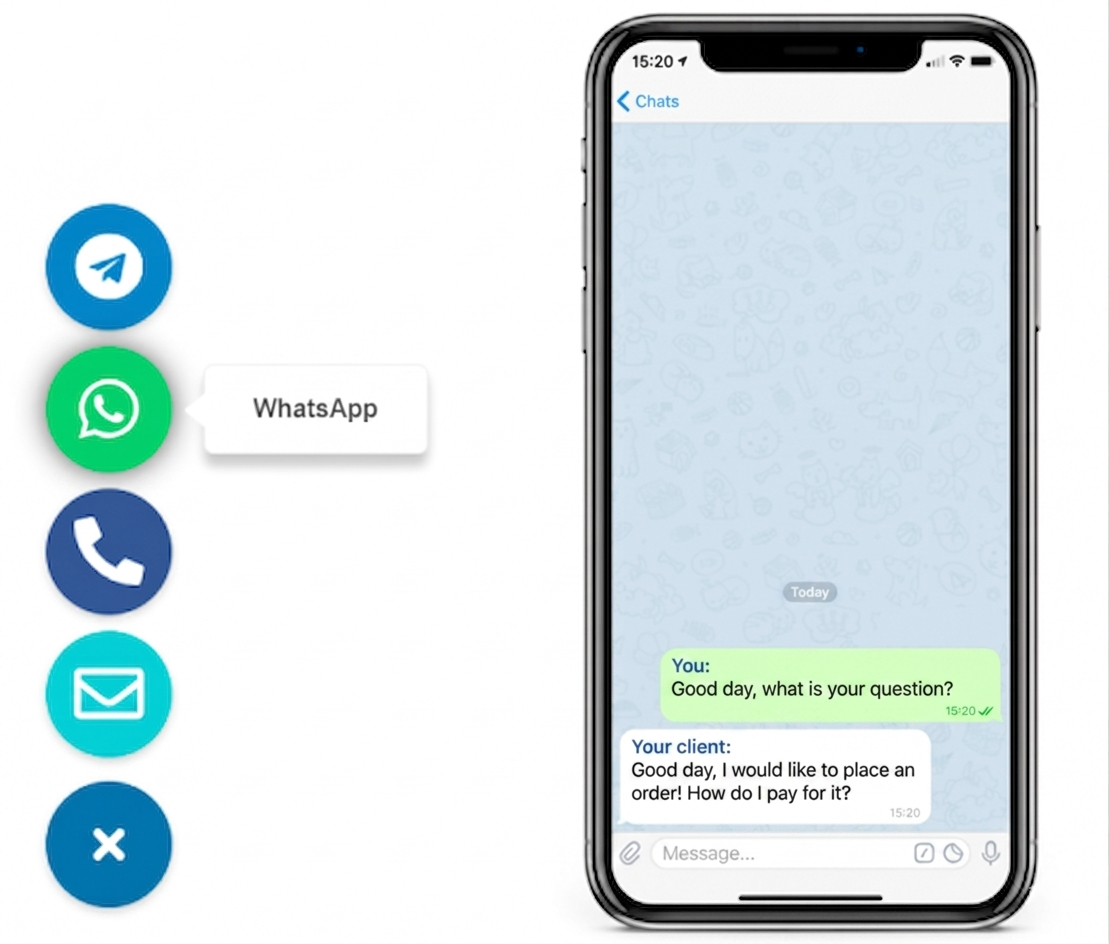
Why add both buttons instead of only one messenger
because visitor preference matters more than your internal channel preference
What it is
A two-channel contact setup using separate buttons or one multi-messenger widget that lets visitors choose WhatsApp or Telegram.
Who it fits
Businesses that serve mixed audiences, run mobile-first traffic, or want to avoid forcing every visitor into one communication app.
What you get
A cleaner conversion path, better channel choice, and more flexibility than a single button or a form-only contact section.
Can you add WhatsApp and Telegram buttons to a website without coding?
If your layout is simple, add two separate CTAs. If you want tighter spacing or one floating entry point, use a single widget that opens both channels from one place.
Best for a fast launch
Add two plain buttons in the hero, contact area, or service section if you want the fastest path from page to message and do not need a more advanced interface yet.
When a widget is cleaner
Use a single widget when two standalone buttons would duplicate design elements across the page or make a smaller mobile layout feel crowded.
PLACEMENT AND UX
Hero or above the fold
Best when the page is built for immediate contact, quote requests, or sales conversations.
Service and pricing sections
Useful when visitors need context first and then choose the messenger that feels easiest.
Floating corner entry point
Best for longer pages where you want both channels available without repeating large button groups.

Two separate buttons vs one multi-messenger widget
Common mistakes when adding WhatsApp and Telegram buttons
- Using generic labels like “Message us” without showing which app the visitor will open.
- Making both buttons identical in places where one should clearly be the primary action.
- Repeating the same two-button group too many times and making the page feel noisy.
- Forgetting to test desktop behavior, where users may land in WhatsApp Web or Telegram Web instead of the mobile apps.
- Adding both buttons even when the audience strongly prefers one channel and the second option adds clutter more than value.
Quick checklist before you publish
- Confirm both destinations are correct.
- Use descriptive anchor text for each channel.
- Choose whether both buttons should have equal or primary-secondary emphasis.
- Check mobile spacing and thumb reach.
- Test one real mobile device and one desktop browser.
- Decide whether two buttons or one widget feels cleaner on the final page.
FAQ
How do I add WhatsApp and Telegram buttons to a website?
Choose the WhatsApp and Telegram destinations, create clear CTAs or one multi-messenger widget, place them in visible sections, and test the full handoff on mobile and desktop.
Can I add WhatsApp and Telegram buttons to a website without coding?
Yes. Most website builders let you add buttons, links, or a simple embed script without custom development.
Do WhatsApp and Telegram buttons work on mobile and desktop?
Yes, but behavior changes by device. Mobile often opens the app directly, while desktop usually continues in browser-based web versions.
Should I use a platform plugin, separate buttons, or one script-based widget?
Start with separate buttons if the layout is simple. Use one script-based widget if you want cleaner spacing, a floating entry point, or an easier multi-channel presentation.
Is it better to show both WhatsApp and Telegram or only one channel?
Show both when your audience uses both and the design stays clear. If the page becomes noisy, keep one primary channel and offer the second inside a compact widget.
Where should WhatsApp and Telegram buttons go on a website?
Place them near high-intent moments such as the hero, pricing area, service sections, contact block, or a floating contact launcher on long pages.
Launch a cleaner two-channel contact flow
If your visitors use more than one messenger, do not force them into a single path. YourChat helps you present WhatsApp and Telegram in a cleaner contact experience that still feels simple.